Complimentary Implant Consultation - Savings up to 50%

By City Park Dental | July 20, 2026
Many Charlotte patients dream of a brighter smile but worry about one thing: sensitivity. Understanding teeth whitening and sensitivity — why it happens and how to stop it in Charlotte — is the first step toward a comfortable whitening experience. The good news is that sensitivity is manageable. With the right approach, you can achieve a whiter smile without suffering through days of discomfort.
Why Does Teeth Whitening Cause Sensitivity?
Whitening treatments use peroxide-based gels to break up stain molecules inside the enamel. These gels temporarily open microscopic channels in the enamel called dentinal tubules. Once open, these channels allow temperature and pressure to reach the nerve more easily. That is what triggers the sharp, shooting sensitivity many patients feel.
The strength of the whitening agent matters. Stronger concentrations produce faster results but can increase sensitivity. The duration of treatment also plays a role. Longer contact time with the gel raises the chance of post-treatment discomfort.
Pre-existing conditions can make sensitivity worse. Thin enamel, gum recession, or untreated cavities all create additional vulnerabilities. That is why a professional evaluation before whitening is so important for Charlotte patients.
How Our Dental Team in Charlotte Minimizes Whitening Sensitivity
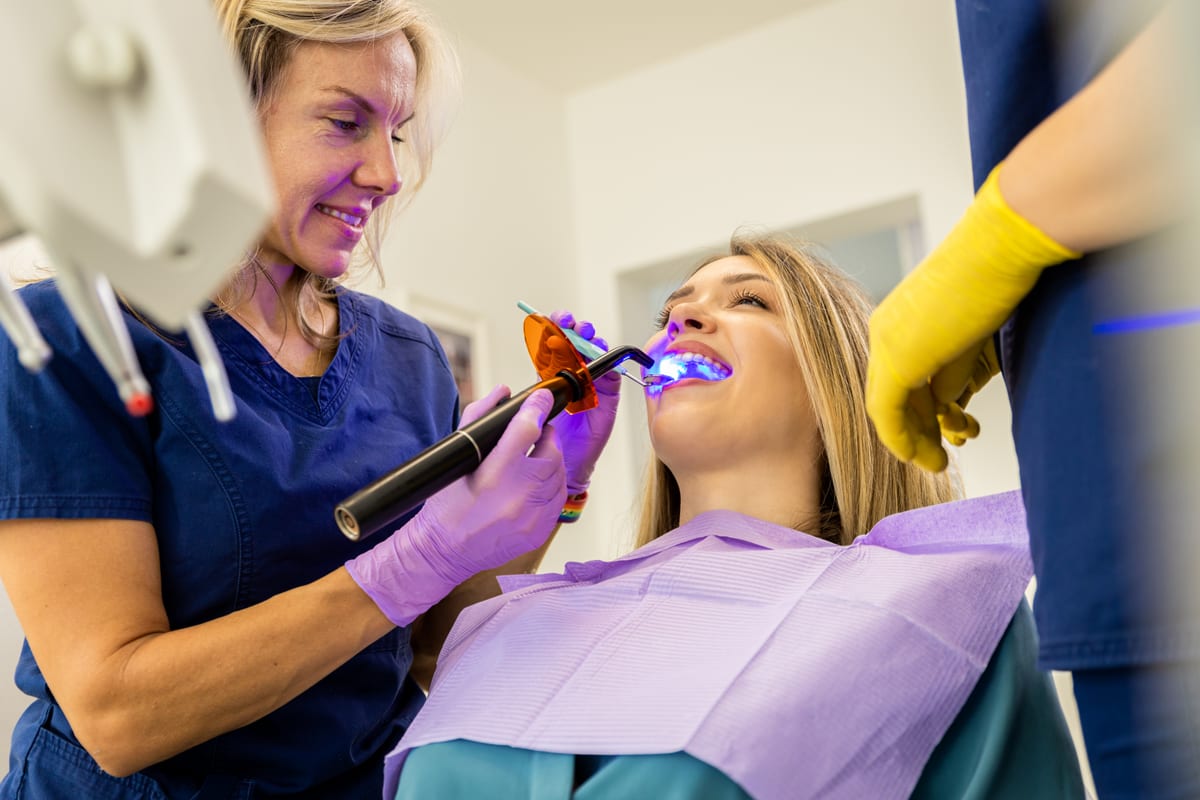
At City Park Dental, our dental team takes a personalized approach to every whitening treatment. We begin with a thorough exam to identify any existing sensitivity triggers. Catching these issues early helps us tailor a treatment plan that protects your comfort.
We use professional-grade desensitizing agents before and after whitening. These products contain potassium nitrate or fluoride. They calm the nerve and help re-mineralize the enamel quickly after treatment.
Our team also controls the concentration and timing of the whitening gel carefully. We match the strength of the peroxide to your unique enamel thickness and sensitivity level. This precision dramatically lowers the risk of post-treatment discomfort.
Here is what patients can expect from a professionally managed whitening visit:
- A pre-treatment sensitivity screening and oral health exam
- Custom-fitted trays that prevent gel from touching the gums
- Application of a desensitizing barrier to protect soft tissue
- Controlled gel concentration chosen for your comfort level
- Post-treatment fluoride application to seal exposed tubules
What You Can Do at Home to Reduce Sensitivity
Professional care sets the foundation, but your at-home habits matter just as much. There are several proven steps you can take to reduce sensitivity during and after whitening.
Switching to a sensitivity-specific toothpaste is one of the easiest changes you can make. Look for products containing potassium nitrate or stannous fluoride. Use this toothpaste for at least two weeks before starting any whitening treatment.
Avoid extreme temperatures in food and drinks right after whitening. Hot coffee or ice water can trigger intense sensitivity when the tubules are still open. Give your teeth 24 to 48 hours before returning to temperature extremes.
Here are additional at-home tips to manage whitening sensitivity effectively:
- Use a soft-bristle toothbrush to avoid aggravating sensitive areas
- Avoid acidic foods like citrus and vinegar for 48 hours post-treatment
- Apply a thin layer of sensitivity toothpaste directly to teeth for 10 minutes
- Space out whitening sessions if using at-home trays provided by your dentist
- Stay hydrated — dry mouth can make sensitivity feel more intense
Professional Whitening vs. Over-the-Counter Options for Sensitivity Management
Many Charlotte residents try whitening strips or drugstore kits before visiting a dentist. These products can work, but they come with higher sensitivity risks. Over-the-counter kits use one-size-fits-all trays that often let gel seep onto the gums. Gum irritation combined with enamel sensitivity can make the experience very unpleasant.
Professional whitening gives our dental team full control over every variable. We adjust the gel strength, application time, and protective measures to your specific needs. This level of customization simply is not possible with a boxed product.
Professional whitening is also part of a broader approach to your smile. Our Cosmetic Dentistry services in Charlotte include comprehensive smile evaluations that identify concerns beyond surface staining. Sometimes what looks like a whitening issue is actually a deeper structural problem. In those cases, treatments like Crowns Bridges may provide a longer-lasting and more comfortable solution for discolored teeth.
Choosing professional care means you get results you can trust. You also get a safety net — our dental team is available to address any unexpected sensitivity right away. That peace of mind is worth a great deal.
When to Call Your Dentist About Whitening Sensitivity
Mild sensitivity after whitening is normal and usually fades within 24 to 48 hours. However, some symptoms signal that you should contact your dentist promptly. Do not ignore these warning signs.
Sharp, lingering pain that lasts more than three days needs professional attention. This could indicate pulp irritation or an underlying cavity that whitening aggravated. Catching this early prevents bigger problems down the road.
Gum soreness or white patches on soft tissue also require a check-in. These are signs the gel may have made contact with gum tissue. Our team can treat gum irritation quickly and adjust your future whitening sessions.
Conclusion
Whitening sensitivity does not have to stand between you and the smile you want. Understanding why it happens gives you real power to prevent it. Working with a trusted dental team in Charlotte ensures every step of your whitening journey is safe and comfortable. City Park Dental is here to guide Charlotte patients through the process from start to finish. Book Now to schedule your appointment with our team.
Frequently Asked Questions
Is teeth whitening sensitivity permanent?
No, whitening sensitivity is almost always temporary. Most patients find it fades within 24 to 48 hours after treatment. Using a desensitizing toothpaste before and after your session can shorten that window significantly.
Can I whiten my teeth if I already have sensitive teeth?
Yes, but you should always consult a dentist first. Our dental team can evaluate the cause of your sensitivity before recommending a whitening approach. In many cases, we can modify the treatment to make it safe and comfortable for you.
How long should I wait between whitening sessions to avoid sensitivity?
Most dentists recommend waiting at least four to six weeks between professional whitening sessions. This gives your enamel time to re-mineralize and your nerve endings time to fully calm down. Rushing sessions increases the risk of prolonged sensitivity.
Does whitening toothpaste cause the same sensitivity as gel treatments?
Whitening toothpastes are much milder than gel treatments and rarely cause significant sensitivity on their own. However, if you already have thin enamel or gum recession, even a mild abrasive can cause discomfort. Check with your dentist before adding any whitening product to your routine.
What is the best toothpaste to use after teeth whitening?
Dentists typically recommend toothpastes containing potassium nitrate or stannous fluoride after whitening. These ingredients calm the nerve and help close the dentinal tubules that were opened during treatment. Avoid whitening toothpastes in the 48 hours immediately after your session.



Ready to Experience Comfortable, Complete Dental Care
At City Park Dental, we’re here to help you achieve a healthier, more confident smile with personalized care for every stage of life. Whether you need a routine checkup, cosmetic treatment, or emergency dental support, our friendly team is ready to welcome you. Schedule your appointment today and discover dentistry designed around you.
Book Online
Live agent available 24/7

980-981-0357