Complimentary Implant Consultation - Savings up to 50%
By City Park Dental | March 23, 2026
Did you know that oral cancer can often be detected early during your routine dental exam? Early detection is crucial because it significantly improves treatment outcomes and increases the chances of a full recovery. Oral cancer doesn’t always present noticeable symptoms in its early stages, which is why regular screenings by a professional are so important.
At City Park Dental, we take your overall health seriously, and that includes the health of your mouth. This blog will help you understand how dentists detect oral cancer during routine exams and why early screening is vital for your well-being. It’s more than just checking for cavities. Your dentist is a key player in identifying potential health risks like oral cancer before they become severe.
The Importance of Routine Dental Exams
Significance of Regular Check-ups
We all know that regular dental check-ups are essential for maintaining healthy teeth and gums, but did you know they also play a crucial role in detecting early signs of serious health conditions like oral cancer? By visiting your dentist regularly, you are not just ensuring that your teeth are in top shape but also safeguarding your overall health.
Routine exams are vital because they allow your dentist to examine your mouth for any abnormalities that might go unnoticed by you. Small changes, like persistent sores or unusual lumps, may be the first signs of oral cancer. These exams help catch these issues early, which can make a world of difference in your treatment options and prognosis.
Early Detection of Oral Cancer
Oral cancer is particularly dangerous because it often goes undetected until it reaches an advanced stage. However, the earlier it’s detected, the higher the chances of successful treatment. The survival rate for oral cancer is significantly higher when it’s caught early. Routine oral cancer screenings in Charlotte during your dental visit are one of the best ways to catch the disease in its early stages, when it’s most treatable.
At City Park Dental, we use advanced techniques and a thorough examination process to ensure that nothing is overlooked. Regular exams help us spot signs of oral cancer while they’re still manageable, giving you the best chance at a full recovery.
Common Risk Factors for Oral Cancer
Certain factors may increase your risk of developing oral cancer. These include:
- Smoking and Tobacco Use: Whether it’s cigarettes, cigars, or smokeless tobacco, using tobacco products significantly increases your risk.
- Heavy Alcohol Consumption: Drinking alcohol in excess is another major risk factor for oral cancer.
- HPV (Human Papillomavirus): Some strains of HPV have been linked to oral cancers, especially in younger individuals.
- Age: Oral cancer is more common in people over the age of 40, although younger individuals are also at risk.
By addressing these risk factors and committing to routine oral cancer screenings, you can stay proactive about your oral health and well-being.

How Dentists Screen for Oral Cancer
Visual Examination
One of the first steps in detecting oral cancer during a routine dental exam is a visual inspection. Dentists carefully examine the entire mouth, including the lips, gums, cheeks, tongue, and the roof and floor of the mouth. They look for any signs of abnormalities, such as unusual white or red patches, sores, or lesions.
These changes can be indicators of oral cancer, particularly if they persist for more than two weeks and do not heal on their own. Discoloration in the mouth, such as white or red spots, can be an early sign that requires further attention.
Dentists are trained to recognize subtle changes that may not be noticeable to the patient. For instance, small lumps, patches, or lesions that appear out of place can sometimes be signs of oral cancer.
Even if a patient does not feel pain or discomfort, these changes may still be present. By spotting these irregularities early, your dentist can refer you for further tests or a biopsy if necessary, helping to catch oral cancer in its most treatable stage.
Palpation (Manual Check)
In addition to the visual exam, dentists also perform a manual check, known as palpation, to feel for any abnormalities inside the mouth and along the neck. This involves the dentist gently pressing on the tissues inside the mouth, as well as checking the lymph nodes in the neck for any swelling or tenderness.
Palpation helps dentists detect any unusual masses or lumps that may not be visible to the naked eye. Swollen lymph nodes or soft, irregular lumps in the mouth or throat area could be indicative of oral cancer or other serious health concerns. This manual check is particularly important for identifying cancers that may not yet show visible signs in the mouth but may have spread to surrounding tissues or lymph nodes.
If any abnormal lumps or tenderness are detected, the dentist may suggest further diagnostic testing, such as a biopsy or imaging, to determine the cause.
Use of Special Tools
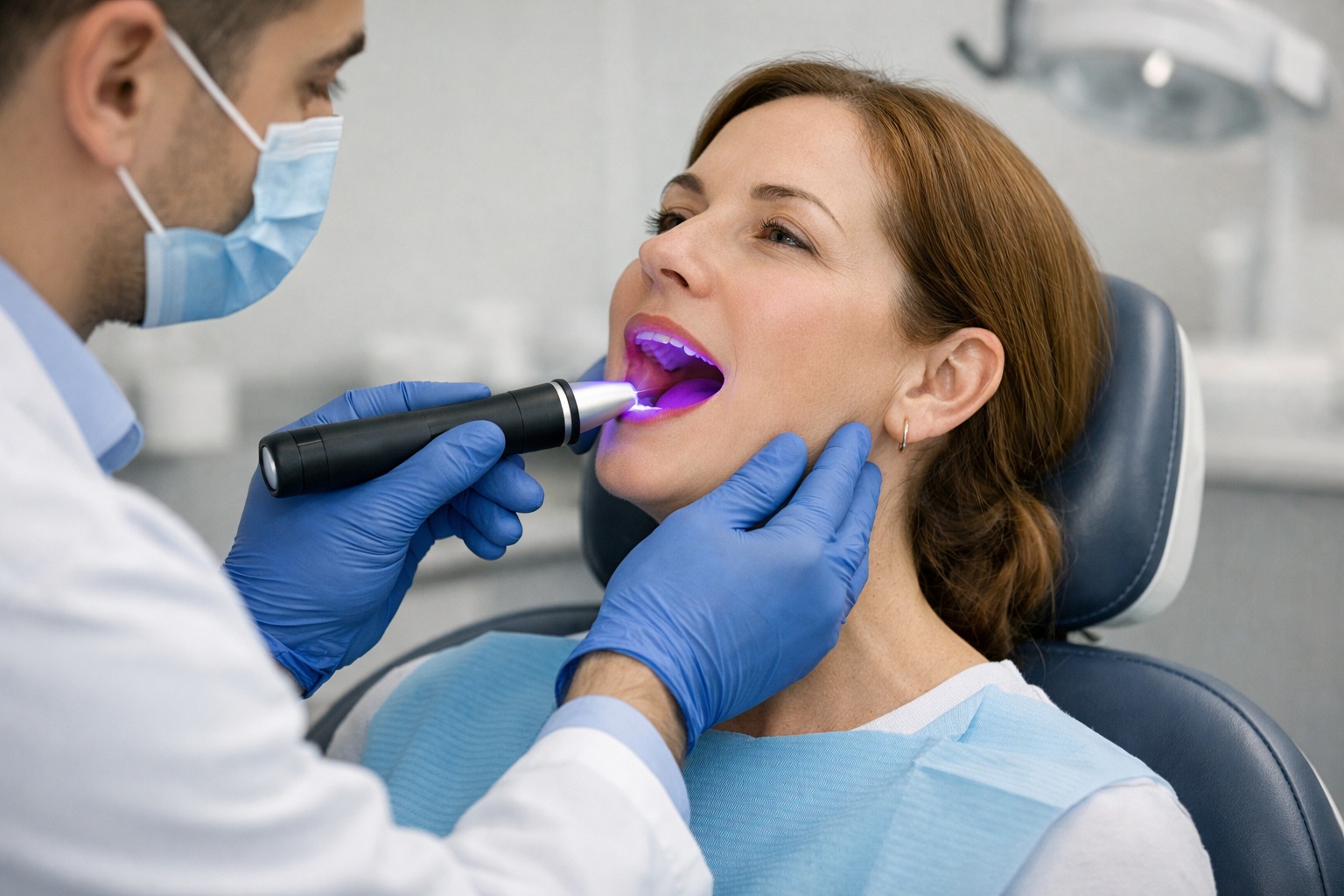
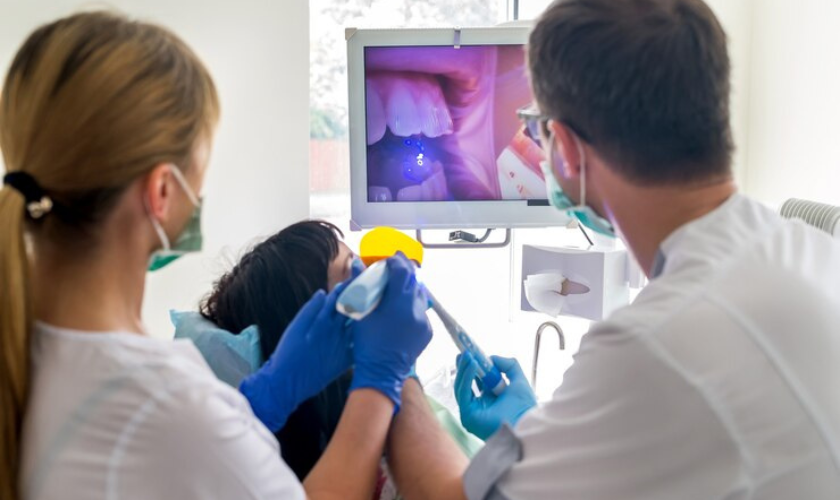
To enhance the detection of oral cancer, dentists may use special tools designed to highlight abnormalities that are otherwise difficult to detect with the naked eye. One such tool is VELscope, a light-based technology that can reveal early signs of oral cancer. The VELscope uses a special blue light to examine the soft tissues in the mouth. Abnormal tissue, such as early-stage cancer cells, will appear darker under the light, making them easier to spot.
VELscope and other similar technologies are highly effective in detecting oral cancer at its earliest stages, even before visual changes occur. The advantage of using these tools is that they can identify subtle cellular changes in the mouth that could go unnoticed during a regular visual inspection. These advanced tools, combined with the dentist’s manual and visual examinations, help ensure that any suspicious areas are detected as early as possible.
Patient’s Role
While the dentist plays a crucial role in screening for oral cancer, the patient’s input is also important. During the exam, your dentist will likely ask questions about any symptoms you may be experiencing, such as pain, difficulty swallowing, or unexplained sores in the mouth. They may also ask if you’ve noticed any lumps, tenderness, or changes in your oral health.
Being open and honest about your symptoms can help the dentist identify areas of concern. For example, if you’ve been experiencing a sore that won’t heal or pain while chewing or swallowing, these could be signs that need to be addressed immediately.
It’s important to note that even if you don’t have noticeable symptoms, regular oral cancer screenings in Charlotte should still be a part of your dental visits. Many cases of oral cancer develop without any initial pain or obvious signs, which is why routine screenings are essential.
By actively participating in your oral cancer screening and sharing relevant health information with your dentist, you contribute to the early detection and treatment of any potential health issues, including oral cancer. The earlier any abnormalities are found, the more options you have for successful treatment.
What Happens if Oral Cancer is Detected?
Further Testing
If your dentist detects something suspicious during your exam, they will likely refer you for additional testing, such as a biopsy. During a biopsy, a small sample of tissue is taken from the suspicious area and sent to a lab for analysis. This is the only way to definitively diagnose oral cancer.
Imaging tests, such as digital X-rays in Charlotte, may also be used to get a clearer picture of what’s happening beneath the surface. These tests help your dentist or oral surgeon determine whether the cancer has spread to nearby tissues or lymph nodes.
Treatment Options
If oral cancer is diagnosed, several treatment options may be available, depending on the stage of the disease. These may include:
- Surgery: The tumor and surrounding tissue may be removed in an attempt to eliminate the cancer.
- Radiation Therapy: High-energy rays are used to target and destroy cancer cells.
- Chemotherapy: Drugs are used to kill or stop the growth of cancer cells.
In some cases, a combination of treatments may be recommended to improve the chances of a full recovery.
Importance of Early Intervention
One of the main reasons why early detection is so important is that it allows for less invasive treatments and a higher chance of complete recovery. When oral cancer is detected at an early stage, treatment is often more successful, and the recovery time is shorter.
At City Park Dental, we are committed to providing thorough and timely screenings, so you can address any potential issues as early as possible.
Oral cancer screenings are an essential part of your routine dental exams, and they play a crucial role in identifying potential health issues before they become serious. At City Park Dental, we are dedicated to ensuring that your oral health is always at its best. If it’s been a while since your last exam, don’t wait. Book your appointment today and take the first step toward protecting your health.
Regular dental visits are key to early detection and prevention of oral cancer. Schedule your next routine exam at City Park Dental and make sure your mouth is as healthy as it can be. Your health is worth the investment.
What People Want to Know
How often should I get an oral cancer screening?
You should have an oral cancer screening at least once a year during your routine dental exam. If you’re at higher risk, more frequent screenings may be recommended.
What are the symptoms of oral cancer?
Symptoms include persistent sores, pain, difficulty swallowing, unexplained lumps, and changes in the color or texture of the tissues in your mouth.
Can I prevent oral cancer?
While you can’t always prevent oral cancer, reducing risk factors like smoking and alcohol consumption, maintaining good oral hygiene, and having regular screenings can help minimize your risk.
Can oral cancer spread to other parts of the body?
Yes, if not detected early, oral cancer can spread to other parts of the body, such as the lymph nodes and distant organs, making treatment more difficult.
Do I need a referral for oral cancer screening?
No, oral cancer screening is typically part of your routine dental check-up. However, if you have symptoms or high-risk factors, your dentist may recommend additional tests.
Related Articles
Ready to Experience Comfortable, Complete Dental Care
At City Park Dental, we’re here to help you achieve a healthier, more confident smile with personalized care for every stage of life. Whether you need a routine checkup, cosmetic treatment, or emergency dental support, our friendly team is ready to welcome you. Schedule your appointment today and discover dentistry designed around you.
Book Online
Live agent available 24/7

980-981-0357